
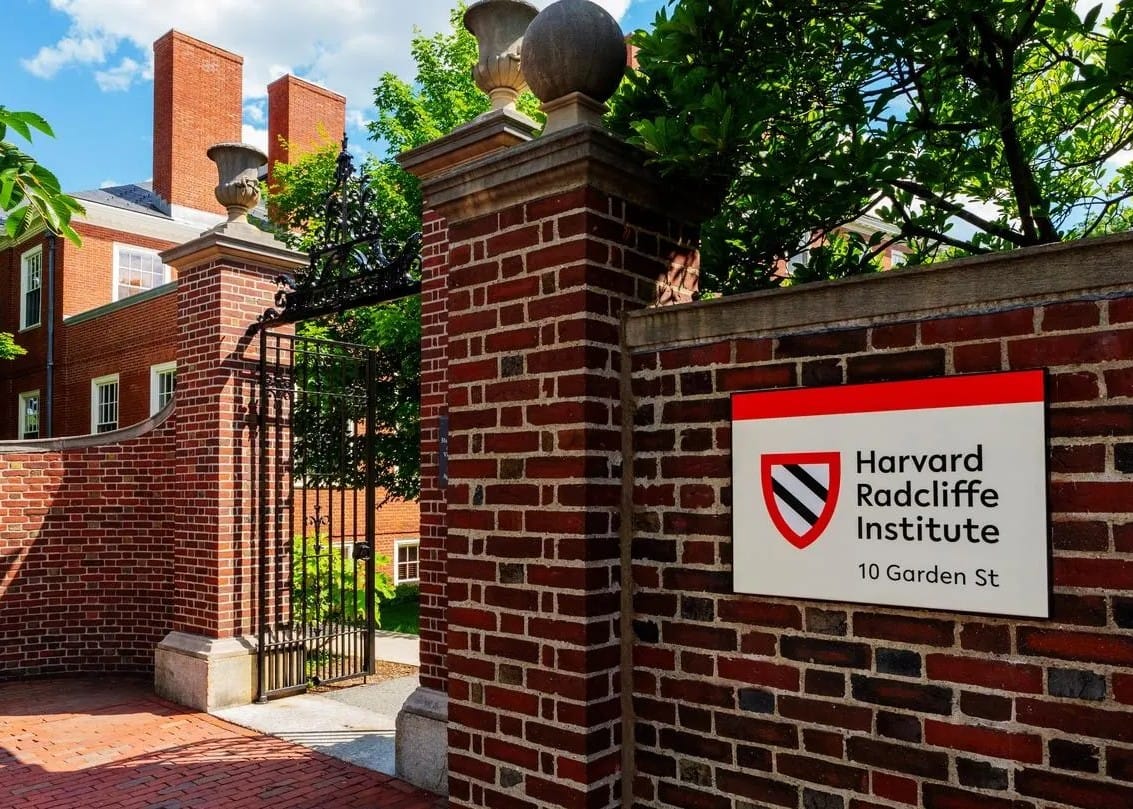
Host: Harvard Radcliffe Institute
University: Harvard University
Program Type: Fellowship
Residency Period: September through May
Place: Cambridge/Boston area
Support: $78,000 stipend and $5,000 project allowance
The Radcliffe Fellowship 2027–2028 is a Harvard-based fellowship for scientists, writers, scholars, public intellectuals, and artists. It supports ambitious work for a full academic year and places fellows in an interdisciplinary community with access to Harvard University resources.
About Radcliffe Fellowship 2027–2028
The fellowship supports proposals that present innovative work and address important social, scientific, and policy issues. It also values projects that reach audiences beyond academia.
Radcliffe welcomes proposals related to women, gender, and society. It also welcomes projects using the Schlesinger Library’s collections. Moreover, applicants may submit proposals connected to the Institute’s 2024–2029 focus area, academic freedom and connecting across difference.
Financial Support and Resources
Selected fellows receive funding and Harvard-based support during the fellowship year.
✓ Stipend of $78,000
✓ $5,000 for project expenses
✓ Possible relocation, housing, and childcare funds
✓ Healthcare support when needed
✓ Office or studio space in Byerly Hall
✓ Full-time Harvard appointment as a visiting fellow
✓ Access to the Harvard Library system
✓ Access to University athletic facilities
✓ Professional development and engagement activities
Fellowship Location and Participation
Fellows must reside in the Cambridge/Boston area from September through May. This requirement allows them to participate fully in the fellowship community.
During the year, fellows attend weekly talks, join professional development workshops, and take part in social events. As a result, the program requires active in-person engagement.
Who Is Eligible
Applicants must apply under the program area that fits their background and proposed project. They must also meet discipline-specific requirements.
• The program is open across career stages
• Academics are not required to have tenure
• Current degree-program students are not eligible
• The program is not designed as a postdoctoral fellowship
• Former Harvard Radcliffe fellows from 1999 onward cannot apply
Eligibility by Field
Humanities and social sciences applicants must hold a doctorate or equivalent in the proposed project area at least four years before the fellowship appointment. For the 2027–2028 year, the listed date is December 2023. They also need a published monograph or at least two refereed journal articles or edited-collection articles.
Science, engineering, and mathematics applicants must also hold a doctorate in the proposed project area at least four years before appointment. In addition, they must have at least five refereed journal articles.
For nonfiction and journalism, the requirements differ by discipline. Journalism applicants need at least five years of professional journalism experience. Nonfiction applicants need one or more published books, a contract for a book-length manuscript, or at least three shorter published works longer than newspaper articles.
Creative arts applicants must meet the listed requirements for their discipline:
• Film and video applicants need significant independent work
• Visual arts applicants need at least five years of professional work, several curated group shows, and at least two professional solo exhibitions
• Fiction applicants need one or more published books, a book-length manuscript contract, or at least three shorter published works
• Poetry applicants need at least 20 poems or a poetry book published in the last five years and must be completing a manuscript
• Playwriting applicants need a significant body of independent work, typically including plays produced or under option
• Music composition applicants must show strong professional achievement and recent performances
Required Application Materials
The online application includes the main form and supporting materials.
• Completed application form
• Curriculum vitae
• Project proposal of 1,400 words
• Bibliography, when appropriate
• Writing or work sample
• Contact information for three references
• Recommendation letters submitted by references through email prompts
Writing and Work Samples
Applicants should follow the work sample rules for their field. Humanities and social sciences applicants may upload writing related to the proposed project or a published article or book chapter. The maximum length is 40 pages.
Science, engineering, and mathematics applicants submit three published articles. Nonfiction and journalism applicants submit around 30 pages, while journalism applicants may also include up to 15 minutes of work on SoundCloud, Vimeo, or YouTube.
Creative arts samples vary by discipline. Fiction applicants submit around 30 pages, poetry applicants submit up to 10 poems, and playwriting applicants submit one play or part of a play up to 30 pages. Visual arts applicants submit 12 images and up to three moving-image excerpts when applicable. Film and video applicants submit up to 15 minutes, while music composition applicants submit one to three recent samples with written scores, except for electronic or improvisational work.
Application Steps
Applicants begin by creating a new account in the online portal. They must use their name, email address, and password.
After registration, applicants log in and select one application area. The available areas are Humanities and Social Sciences, Creative Arts, Nonfiction and Journalism, and Science, Engineering, and Mathematics. All application materials must be submitted through the online portal.
Review and Results
Radcliffe uses a two-stage evaluation process. Experts in the relevant field review applications first. Then, a multidisciplinary committee selects the final fellowship class.
The review considers the project’s quality and significance. It also assesses intellectual and creative capacity, achievement, extraordinary promise, collegiality, and openness to cross-disciplinary exchange. Applicants will receive results by email by the end of March 2027.
Key Deadlines
• Humanities, Social Sciences, Creative Arts, Nonfiction, and Journalism: 10 September 2026 at 5 PM ET
• Science, Engineering, and Mathematics: 1 October 2026 at 5 PM ET
• Result notification: by the end of March 2027
